
Emerging Technologies That Will Shape the Future Beyond 2026

Table of Contents
Technology is changing faster than ever. What once seemed like science fiction—AI assistants that can perform tasks, robots working alongside people, intelligent devices making decisions at the edge, and computers solving highly complex problems—is gradually becoming part of the real world.For businesses, this shift is especially important. Companies that understand where technology is heading can prepare their teams, infrastructure, products, and services before these technologies become mainstream.
So, what technologies could shape the years ahead?
1. Agentic AI and Autonomous AI Systems
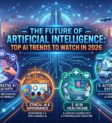
Artificial intelligence has already moved beyond simple chatbots and content generation. The next stage is agentic AI—systems that can understand a goal, plan a series of actions, use digital tools, and complete tasks with less step-by-step human instruction.
Instead of asking an AI system to write an email, for example, a business could eventually give an AI agent a broader objective such as:
“Find suitable leads, research their businesses, prepare personalized outreach, update the CRM, and create a follow-up schedule.”
Why it matters
Agentic AI could influence:
- Customer support
- Software development
- Business operations
- Marketing
- Sales
- Research
- Cybersecurity
- Data analysis
- Workflow automation
2. AI-Powered Robotics
Robotics is another field likely to change significantly after 2026.
Traditional robots are generally designed for specific, predictable tasks. Newer intelligent robots are being developed with better perception, language understanding, navigation, manipulation, and decision-making.
The combination of AI and robotics could allow machines to operate in environments that are less predictable.
Imagine robots that can:
- Understand spoken instructions
- Recognize objects
- Move through unfamiliar environments
- Assist warehouse workers
- Support manufacturing
- Perform repetitive physical tasks
- Help with logistics
- Adapt to changing conditions
3. Edge AI and On-Device Intelligence
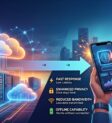
Much of today’s AI processing happens in cloud data centres. However, another important trend is moving AI closer to where data is actually generated.
This is known as edge AI.
Instead of sending every piece of information to a remote server, smartphones, cameras, vehicles, industrial machines, medical devices, and other connected products can process more information locally.
This can provide several benefits:
- Faster responses
- Lower network dependency
- Better privacy
- Reduced data transfer
- Greater reliability
- Real-time decision-making
- For example, an industrial machine could identify a potential equipment problem locally rather than sending every sensor reading to a distant cloud server.
4. Quantum Computing
Quantum computing is one of the most discussed technologies of the future, although its practical applications are still developing.
Unlike conventional computers, quantum computers use quantum mechanical principles to process information in fundamentally different ways.
The technology could eventually contribute to areas such as:
- Drug discovery
- Materials science
- Complex optimization
- Financial modelling
- Chemistry
- Scientific research
- Cryptography
Quantum computing should not be viewed as a replacement for ordinary computers. Instead, it is more likely to become a specialized technology for certain classes of difficult problems.
5. Biotechnology and AI-Driven Healthcare
The future of technology will not be limited to computers and software.
Biotechnology is increasingly connecting with artificial intelligence, advanced computing, robotics, and data science.
AI can help researchers analyze enormous biological datasets, identify patterns, model molecules, and accelerate parts of the research process.
This could contribute to advances in:
- Drug discovery
- Personalized medicine
- Diagnostics
- Synthetic biology
- Biomaterials
- Biomanufacturing
- Disease research
The Biggest Change: Technology Will Converge
One of the most important things to understand about the future is that these technologies will not develop independently.
AI will connect with robotics.
Robotics will connect with spatial computing.
Quantum technologies may connect with AI and scientific research.
Biotechnology will connect with AI and advanced manufacturing.
Advanced materials will improve energy storage and electronics.
Edge computing will make intelligent devices faster and more independent.
How Businesses Can Prepare for the Future
Companies do not need to adopt every emerging technology.
Instead, businesses can take a practical approach.
1. Identify real problems first
Technology should solve a business problem rather than exist simply because it is trending.
2. Start with practical AI
Automating repetitive tasks, improving customer support, analyzing data, and assisting employees can provide useful starting points.
3. Invest in digital infrastructure
Cloud systems, APIs, cybersecurity, data management, and scalable software will become increasingly important.
4. Develop employee skills
Technology changes quickly, but people still need to understand how to use, supervise, and evaluate these systems.
5. Pay attention to security
Every new connected system creates potential security risks. Cybersecurity should be considered during implementation rather than added later.
6. Watch technology convergence
The biggest opportunity may not come from one technology. It may come from combining several technologies to create a new solution.
Challenges of Emerging Technologies
The future will bring opportunities, but it will also create challenges.
Cost is one major issue. Advanced hardware, computing infrastructure, research, and skilled professionals can be expensive.
Security is another concern. More connected systems mean more potential attack surfaces.
Privacy will become increasingly important as intelligent systems collect and process more information.
Energy consumption is also a growing issue, particularly for AI infrastructure.
There are also questions about employment, regulation, digital inequality, misinformation, and responsible AI development.
Technology itself does not automatically produce positive or negative outcomes. Much depends on how organizations design, deploy, regulate, and use it.
What Will Technology Look Like Beyond 2026?
There probably will not be one single “future technology” that changes everything.
Instead, the future is likely to look like an interconnected technology ecosystem.
AI will provide intelligence.
Robotics will bring intelligence into the physical world.
Edge computing will bring processing closer to users and machines.
Quantum computing may address specialized computational problems.
Biotechnology will connect computing with biology.
Spatial computing will connect digital information with physical environments.
Advanced materials will improve the hardware behind these systems.
Next-generation energy will provide the infrastructure needed to operate them.
Together, these technologies could change how businesses operate, how products are designed, how healthcare is delivered, and how people interact with digital systems.